

Second Shot at Love
A remembrance of Dr. Darryl Jon Sutorius — and the quiet cost of believing in love again

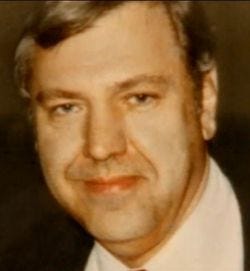
⸻
Dedication
This piece is dedicated to Janet Sutorius,
who built a life and a family with Darryl long before his name became a headline,
and to his daughter Deborah,
who saw the danger early, spoke up, and carried a truth no one wanted to hear until it was too late.
Your clarity mattered.
Your love mattered.
And your voices deserve to be part of how this story is remembered.
⸻
Essay Body
On February 19, 1996, Dr. Darryl Jon Sutorius was killed by his wife.
That sentence is where most retellings begin — and where they usually stay. Names are swapped, aliases are catalogued, timelines become clever. The story turns into a puzzle box with a villain at its center.
But this is not her story.
This is about a man who wanted to be loved.
Darryl Sutorius was a physician. A working man. A caregiver by profession and, by all accounts, by nature. He had a family. He had responsibilities. He carried the quiet weight that comes with being dependable.
After his divorce, something shifted — not dramatically, not loudly. Just enough to leave him lonely.
This was the early 1990s. No apps. No background checks. No Google search that could save you in ten seconds flat. Dating services existed because people needed help finding connection — especially people who weren’t chasing chaos, just companionship.
Darryl didn’t want a mystery.
He wanted a second chance.
It’s easy, decades later, to say he should have known. That’s the cruelty of hindsight — it assumes access to information that didn’t exist, and it dismisses how powerful loneliness can be when it arrives quietly.
The woman he met came with stories. With names. With a past that never quite settled. But hope has a way of smoothing rough edges. And men of Darryl’s generation weren’t taught to interrogate red flags — they were taught to endure discomfort, stay polite, and try harder.
He did what many people do when they believe love might still be possible:
he trusted.
What makes this story unbearable is not just what happened — it’s when.
By early 1996, Darryl had begun to understand that something wasn’t right. He was close to divorcing her. The clarity had arrived. The fog was lifting.
And that’s when she killed him.
The timing matters. Because it strips away the myth that he was naïve until the end. He saw. He knew. He was trying to leave.
He just didn’t get the chance.
She would later be denied parole and die in prison in 2010 — four years before she would have even been eligible for release. The system closed the book.
But Darryl’s life didn’t get a closing chapter. His name became a footnote in someone else’s pathology. His humanity was reduced to a cautionary tale.
And that feels wrong.
Thirty years on, it feels important to say this plainly:
There was nothing foolish about wanting love after heartbreak.
There was nothing weak about trusting a dating service.
There was nothing pathetic about believing life could still hold joy.
Dr. Darryl Jon Sutorius didn’t die because he was careless.
He died because someone exploited his hope.
And hope should never be something we mock.
This is not true crime.
It is remembrance.
For a man who worked hard.
Who took care of others.
Who wanted to take care of a family again.
Who believed — maybe too generously — that love could still show up.
Thirty years later, his name deserves to be spoken without spectacle.
Just respect.
⸻
Chip POV (brief, asleep):
snore… pfffft
go get ’em bruh
⸻
Author’s Note
I chose to write this thirty years later because time has a way of sanding people down into archetypes — villains, victims, spectacles — while erasing the ordinary humanity in between.
This piece isn’t an investigation and it isn’t a retelling. It’s a refusal to let a man’s life be remembered only as the final act of someone else’s story.
Darryl Sutorius mattered. His first wife mattered. His children mattered. The concerns that were raised — especially by those closest to him — mattered.
Remembering him this way is not about reopening wounds.
It’s about correcting the lens.